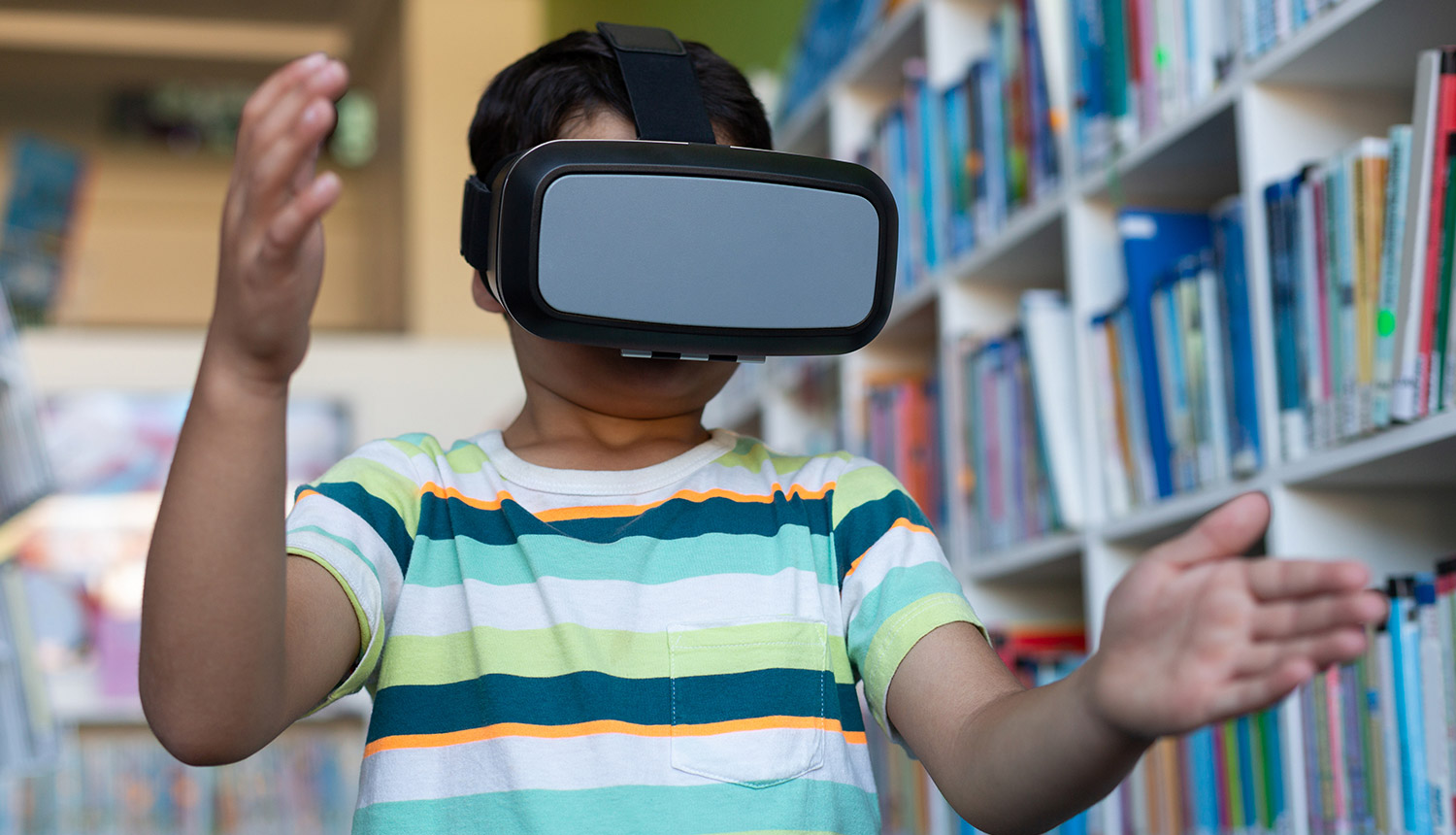
VR in schools and how it helps students

Virtual Reality, or VR, is the current bleeding edge of digital interactivity. When it comes to immersivity nothing else comes close. But VR is useful for far more than mere entertainment, it is also a powerful tool for industry, training and education. VR has already carved its own niche in the medical profession. In particular, surgeons can use it to practice operations in a virtual environment. The design and construction industries now use it to show virtual representations of proposed buildings, both inside and out. VR is now set to create its niche in the education and training sectors as well, for both adults and children. One drawback of earlier VR systems were the cables which needed to be tethered to a PC. However, the latest VR headsets are standalone units powered by rechargeable batteries. This means no more cables to get tangled up in or trip over.
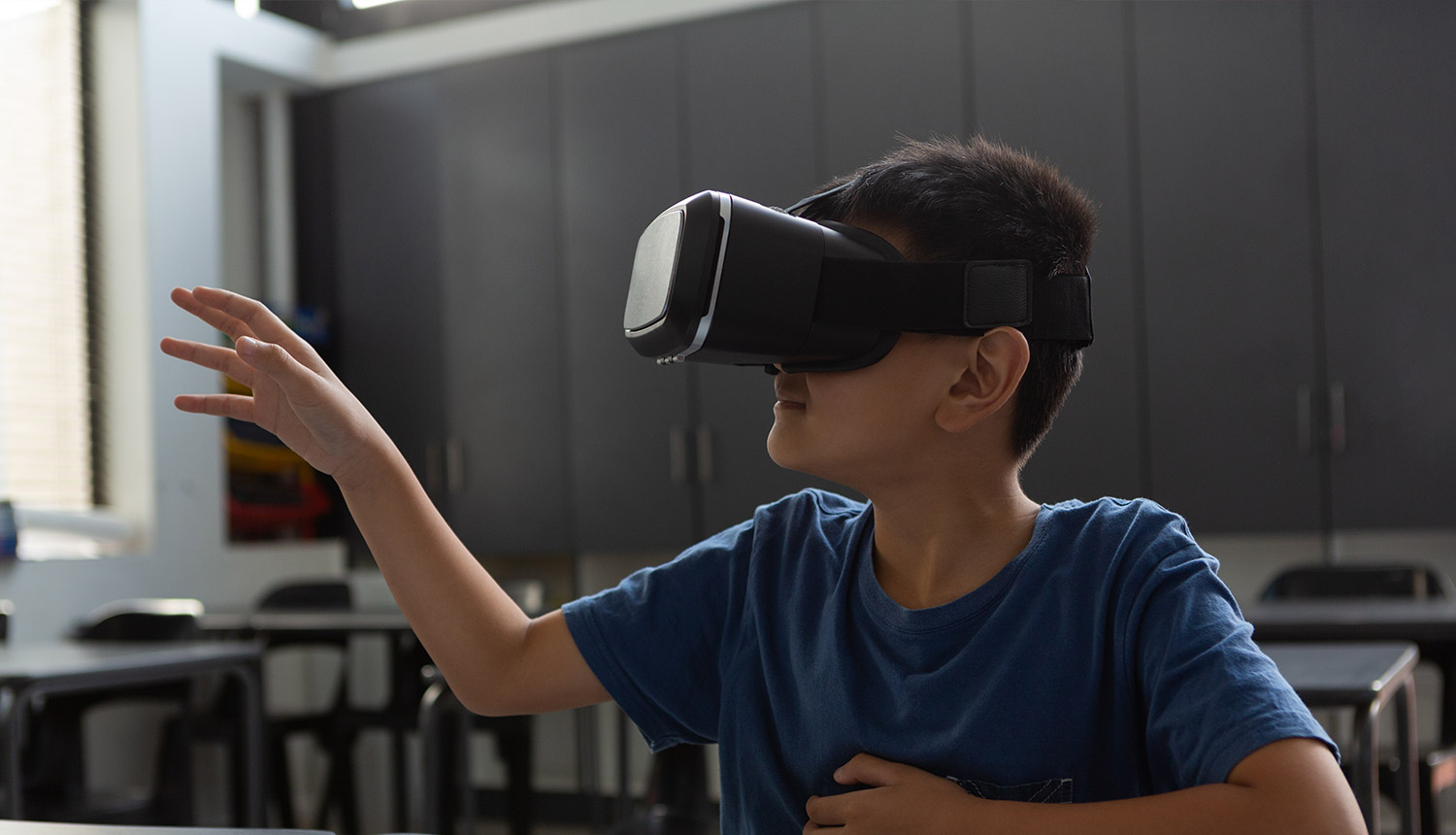
The main barrier to entry of earlier VR systems was the considerable cost of both the VR systems themselves and the powerful PCs needed to run them. However, the latest child friendly standalone headsets cost far less then you might think, putting them within the reach of a school’s budget.
So, VR as a teaching aid in schools is now a reality, but what does it bring to the classroom that other teaching methods cannot provide? Let’s take a look at each education stage in turn.
Preschool
Pre-schoolers learn mainly through experience and play. VR reinforces learning by providing a fully immersive experience that pupils will both enjoy and remember long after the lesson has finished. Interactive VR experiences build speaking and listening skills, which as we all know are the fundamental foundations of education. VR is particularly useful for reinforcing the learning goals of educational visits, by allowing pupils to re-live real-world experiences virtually. What’s more, it can then extend pupils learning. For example, imagine being able to tell your pupils “Remember that animal we saw in the zoo? Let’s put on our VR headsets and see it in its natural habitat, the Amazon Rainforest”. VR allows pupils to experience virtually what they cannot physically. This could be anything from enabling a child in a landlocked region to experience the sea to more outlandish experiences that would be impossible for anyone, such as a visit to Mars or a trip back in time to the age of the dinosaurs.
Primary / Elementary Schools
VR can enhance pupils speaking (thus writing) skills. The sensory nature of VR improves the quality of pupil’s descriptive language. VR’s immediacy can benefit pupils who may struggle to know what to write when looking back on an experience after the experience has ended. Encouraging pupils to describe sensations as they happen is sure to generate a lot of adjectives. VR helps contextualise a concept. Seeing that concept in action is often easier to understand, particularly for visual and kinesthetic learners. When combined with headphones, auditory learners can benefit too. It is common knowledge that lived experiences are easier to remember than words on a page. VR’s truly immersive experience can turn a lesson into a lived experience which will aid retention.
SEN
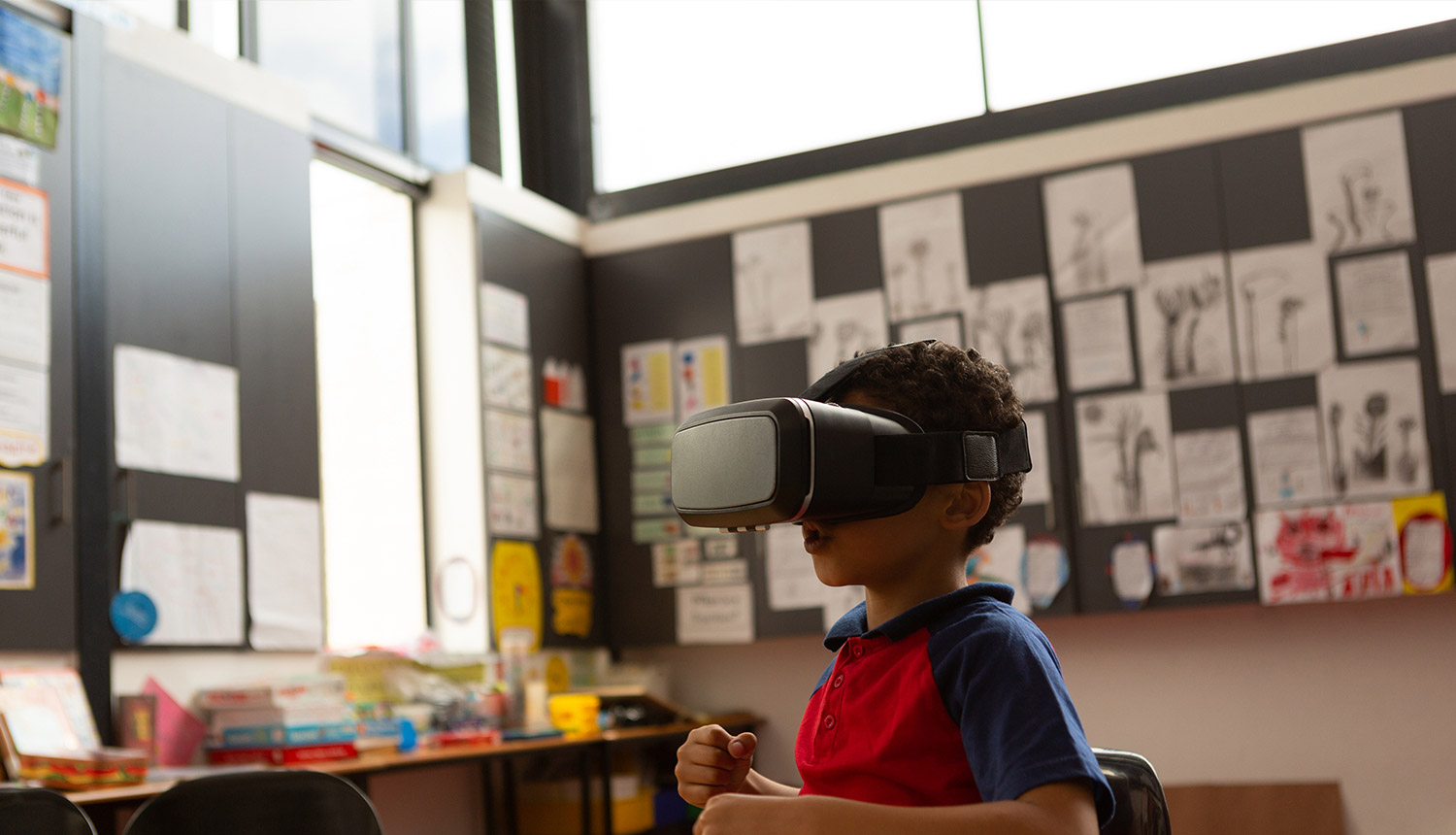
VR is especially useful for SEN pupils, for a number of reasons. Firstly, VR may allow SEN pupils to do virtually what they are unable to do physically. This is great for inclusion as pupils with physical disabilities can participate in events virtually that they otherwise might not be able to participate in at all. VR is particularly helpful for pupils with ASD. VR can create a calm sensory environment which can help prevent meltdowns. Because pupils know they can remove the headset at any time they may feel confident they will not be subjected to sensory overload. Many pupils with ASD are visual learners, so VR is ideally suited to them. VR can help teach life skills in a safe and controlled virtual environment. This may allow pupils to practice these skills virtually before trying them out in reality. This may help ease the anxiety that can come with attempting new things. VR can also help ASD pupils prepare for change. For example, imagine taking them on a field trip to an unfamiliar location – a situation which can often be challenging. Now imagine your pupils being able to explore a virtual representation of that location before traveling there in reality. This may ease the transition considerably, thus making the field trip less stressful and more enjoyable for all concerned. VR is a highly engaging experience. What’s more, for many pupils it will be a novel experience as they may not have experienced VR before. This can be particularly useful for children with concentration difficulties, short attention spans and those less academically inclined.
Secondary schools
Research suggests that the brain tends to remember 10% of what it reads, 20% of what it hears and 90% of what it does or simulates. As such, VR is fantastic for recall, especially amongst easily distracted teenagers. Many pupils of the current generation have never known a world without smart phones and the internet. As such, getting them enthused about technology may require using technologies they do not already have access to in everyday life. VR is just the ticket, as it is still at the bleeding edge of modern audio-visual technology. VR can allow pupils to live in someone else’s shoes for a time virtually. This may help build empathy and allow students to gain a better understanding of the difficulties some of their peers may face. VR can be an active and creative experience too. Pupils can use 360-degree cameras to take their own photos which the school can then upload to create new virtual environments to explore.